Get a Quote!

+1-(334) 899-1293

707 Midland Exd St Ashford, Alabama(AL), 36312

Edit Template

Beyond the Clock:

Why African Time Isn't What You Think

We all have a relationship with time, whether we realise it or not. We’re constantly chasing it, running out of it, or trying to make the most of it. But what if we told you that your idea of time is just one of many? From ancient philosophies to the rhythm of our own African streets, time is a mind-bending concept. Let’s explore its fascinating nature and how it shapes who we are.

When Time Was a Circle

Ever thought about time being a loop, not a straight line? Well, many ancient cultures did. The ancient Greeks and Romans, for instance, saw time as a progression of events, but also as a repeating cycle, just like the seasons.

However, the most profound perspective on this comes from the Vedic traditions of India. Here, time, or Kala (काल), is a cycle of creation and destruction. The very root of the word Kala means “to drive forward,” suggesting time is an unstoppable force propelling everything toward its destiny.

This idea is powerfully captured in the Bhagavad Gita, where Lord Krishna declares, “Time I am, the great destroyer of the worlds.” This is a profound truth that time is the ultimate force of change, bringing things into existence and dissolving them, only to begin new cycles again.

The Vedas describe huge eras, or Yugas, each one a step down in virtue. This cyclical view teaches us to live each moment to the fullest, knowing that everything has its season.

The Modern Take: Time Gets Weird

In our modern world, we’ve broken down time in different ways.

Physics shows us that time isn’t a constant. Einstein’s theory of relativity says that time is woven together with space, and it can stretch or compress depending on speed and gravity. If you were near a black hole, time would pass much slower for you than for your mates on Earth!

In biology, we have our own internal timekeepers: our biological clocks. These circadian rhythms manage everything from sleep to our metabolism, proving that time is literally in our DNA.

And in philosophy, we still ask the big questions: Is time a real thing we move through, or is it just something our minds created to make sense of the world?

The Rhythm of Culture: When Time Becomes a Feeling

How we relate to time is deeply cultural. It’s in our social norms, our language, and our well-being.

Latin American Rhythms: The Art of the Siesta

In many Latin American cultures, time isn’t a rigid master. The tradition of the siesta, or afternoon rest, isn’t about laziness. It’s a smart way to handle the hottest part of the day, often with family. This culture values human connection and well-being over a strict work schedule, making time a flexible resource that bends to the needs of people.

African Rhythms: Past, Present, and “Now-Now”

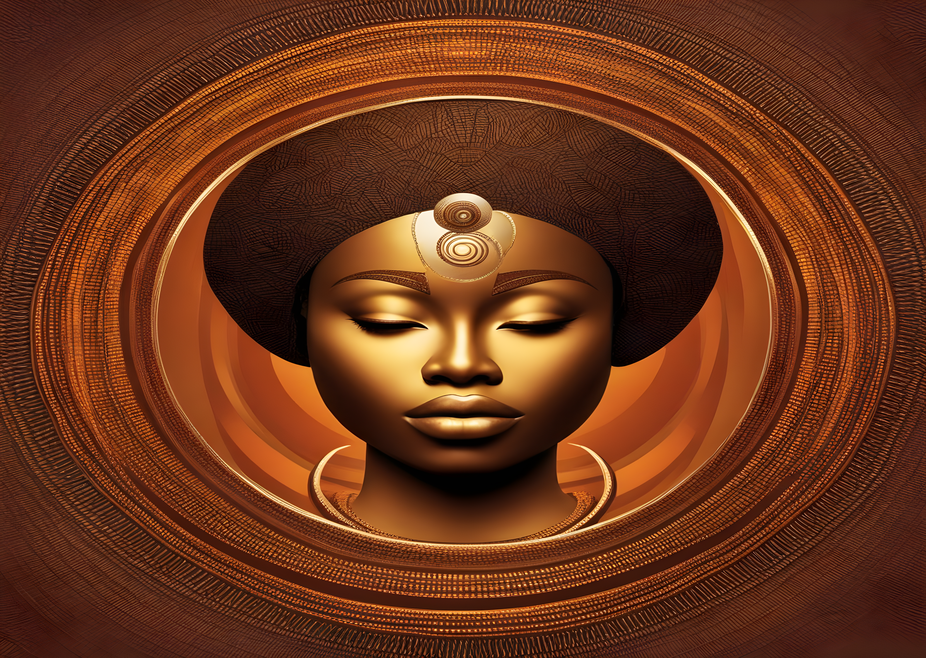
In many African cultures, time is viewed more by events than by a linear clock. Instead of focusing on a distant future, the focus is on the present and the past. Time is marked by natural events – like sunrise, planting, or harvest – and it’s understood in a flexible, natural way.

This is why the past is so present. Ancestors and traditions aren’t just history; they influence the now. And here in South Africa, this flexible mindset has its own unique vocabulary:

  • Just Now: This means “in the near future,” not immediately. It could be in a few minutes, or maybe even tomorrow. You’ll do the dishes “just now.”

  • Now: The opposite of what you’d think! “I’ll do it now” actually means “maybe later, but definitely not now.”

  • Now Now: This is more urgent than “now,” meaning “shortly” or “soon.” It’s more likely to happen than “just now” but still has no guarantees.

  • Right Now: This is the most urgent of them all, with a high probability of action. But still, no guarantees!

  • Present Time: Refers to the current period of time, “at this time,” and should not be confused with “right now.”

This flexible approach to time is all about social harmony and the rhythm of life, not the cold tick of a clock.

Islamic Perspectives: Time as a Divine Sign

In Islam, time is a divine creation and a precious gift. It’s seen as a trust from Allah, and Muslims are encouraged to use every moment wisely for good deeds. While time is linear, with a beginning and end, it also has a powerful cyclical nature, marked by daily prayers, annual rituals like Ramadan, and the Hajj pilgrimage.

What Does This Mean for You?

Our relationship with time shapes our well-being. Westerners, for instance, often see time as a commodity to be managed, leading to stress and burnout. In contrast, cultures that embrace a more flexible, present-oriented view tend to have stronger community bonds and a more relaxed pace of life.

Ultimately, there’s no single right way to see time. From ancient cycles to the modern understanding of spacetime, time is a complex and beautiful thing.

So, how do you see time? Is it a master, a friend, or simply a rhythm you move with?

© 2026 Wandifully.com. All rights reserved.